Why He Grills Like He's Being Watched
He has strong opinions about heat management for a man who makes scrambled eggs twice a year. Put him in front of an open flame and something ancient activates.
He does not cook. This is an established fact. The kitchen is a room he passes through. He knows where the cereal is. Beyond that, it gets hazy.
Put a grill in the backyard, however, and something happens.
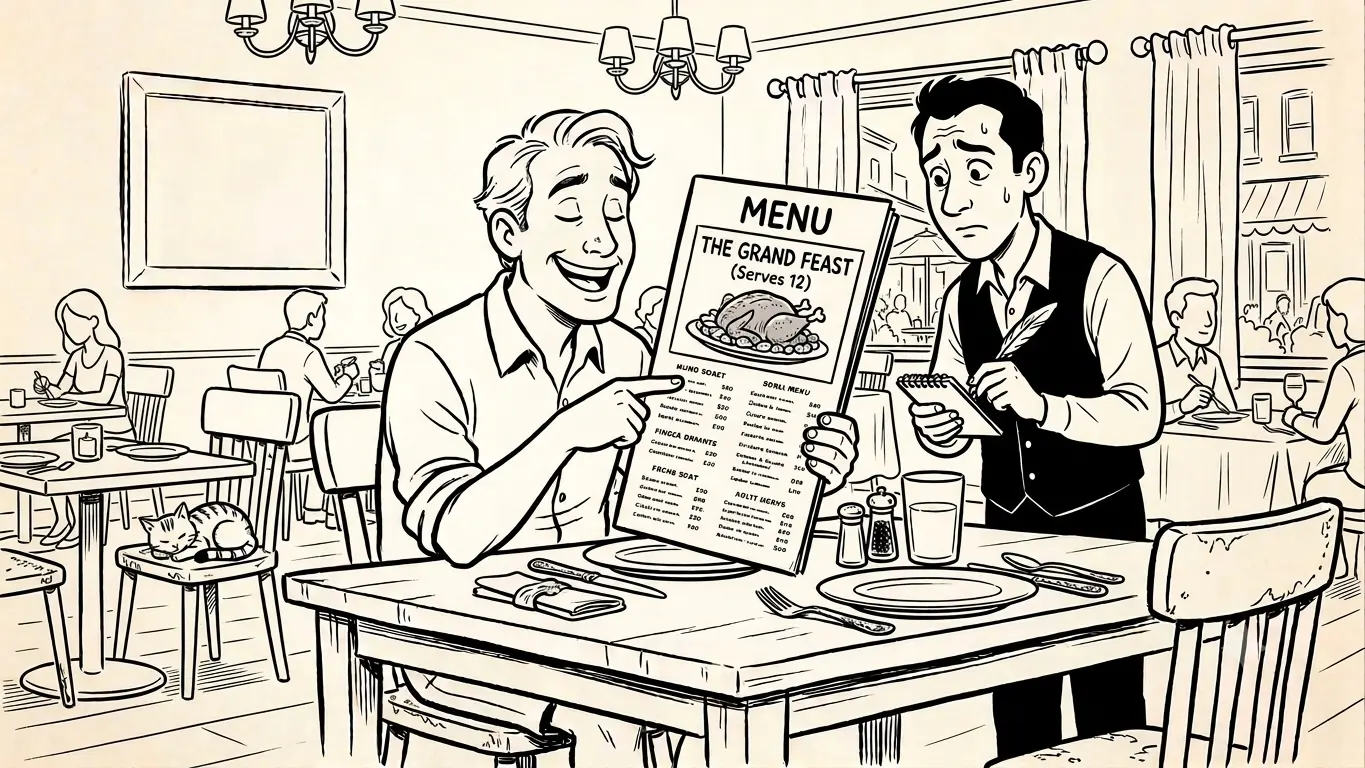
Suddenly he has opinions. About wood chips. About resting time. About the specific internal temperature a piece of meat needs to reach before it is ready, which he will tell you about whether you asked or not. He is standing over an open fire with tongs, wearing an expression that suggests this is exactly what he was designed to do.
You have watched this man eat leftovers cold from the container. This same man is now explaining the difference between direct and indirect heat.
Why the Grill Is Different
Consumer surveys consistently find that men identify as the primary griller in their household at rates significantly higher than their participation in everyday cooking. The math doesn’t add up unless you understand what’s actually happening: indoor cooking and outdoor cooking are not the same activity to him. They just share an ingredient category.
Indoor cooking is maintenance. It happens in a room associated with routine and obligation. Outdoor cooking is performance. It happens in the open, in front of an audience, with fire. These are not equivalent in his nervous system, and he is not pretending otherwise.
This connects directly to what researchers documented in the pizza study, the finding that men eat significantly more food in the presence of women than when eating alone or with other men. The mechanism behind that isn’t hunger. It’s display. His ancient brain reads “audience” and responds with output. The eating is the display when he’s at the table. The cooking is the display when he’s at the grill.
He is not performing for you specifically. He would perform this exact way for anyone who happened to be watching. The audience just has to exist.
What He Is Actually Doing
Standing over a fire, managing heat, providing food for a group of people. This is, in the most literal sense, one of the oldest things a man can do. The grill is where he gets to be straightforwardly useful in a way the modern world doesn’t offer very many opportunities for.
The office doesn’t give you fire. The commute doesn’t give you fire. The emails give you nothing resembling fire. The grill gives him something tangible to control, a clear measure of success, and a result everyone can see and eat. The result is either good or it isn’t. He gets credit if it is. He knows exactly how he contributed.
That’s a cleaner feedback loop than most of what he deals with all week.
The Part Where You Let Him Have This
The food will probably be good. Maybe not every time, and maybe not as consistently as he believes, but good enough that the negotiation isn’t worth it.
What he needs from you in exchange for this behavior is not enthusiasm, not detailed appreciation of his technique, and definitely not a competing opinion about the temperature. What he needs is for the audience to remain present and not noticeably bored.
He is providing. In his nervous system, right now, that is exactly what he is doing. The tongs are props. The fire is real. The satisfaction he gets from feeding people with something he made himself is the same satisfaction that has existed in men for a very long time, dressed up in a Weber kettle and whatever seasoning he bought at a farmers market.
Let him have the grill. The scrambled eggs aren’t coming back anyway.
This is an excerpt from Chapter 8 of Beers, Burgers and Booty. The full chapter covers the Celebration Belly, the Competitive Eater he doesn’t know he is, and why a random Wednesday meal lands the way it does. It’s in the book.