The Remote Control Is Not About the Remote Control
He holds it even when he's not changing anything. He sleeps with it nearby. He knows exactly where it is at all times. None of this is about television.
At some point you noticed he always has it.
Not using it, necessarily. Just holding it. Resting it on his leg. Setting it on his side of the couch with the comfortable ease of a person placing something valuable somewhere it belongs. You could be watching something you both agreed on, nothing in dispute, no competing preference in play, and it is still in his hand.
You asked about it once. He looked genuinely confused by the question.
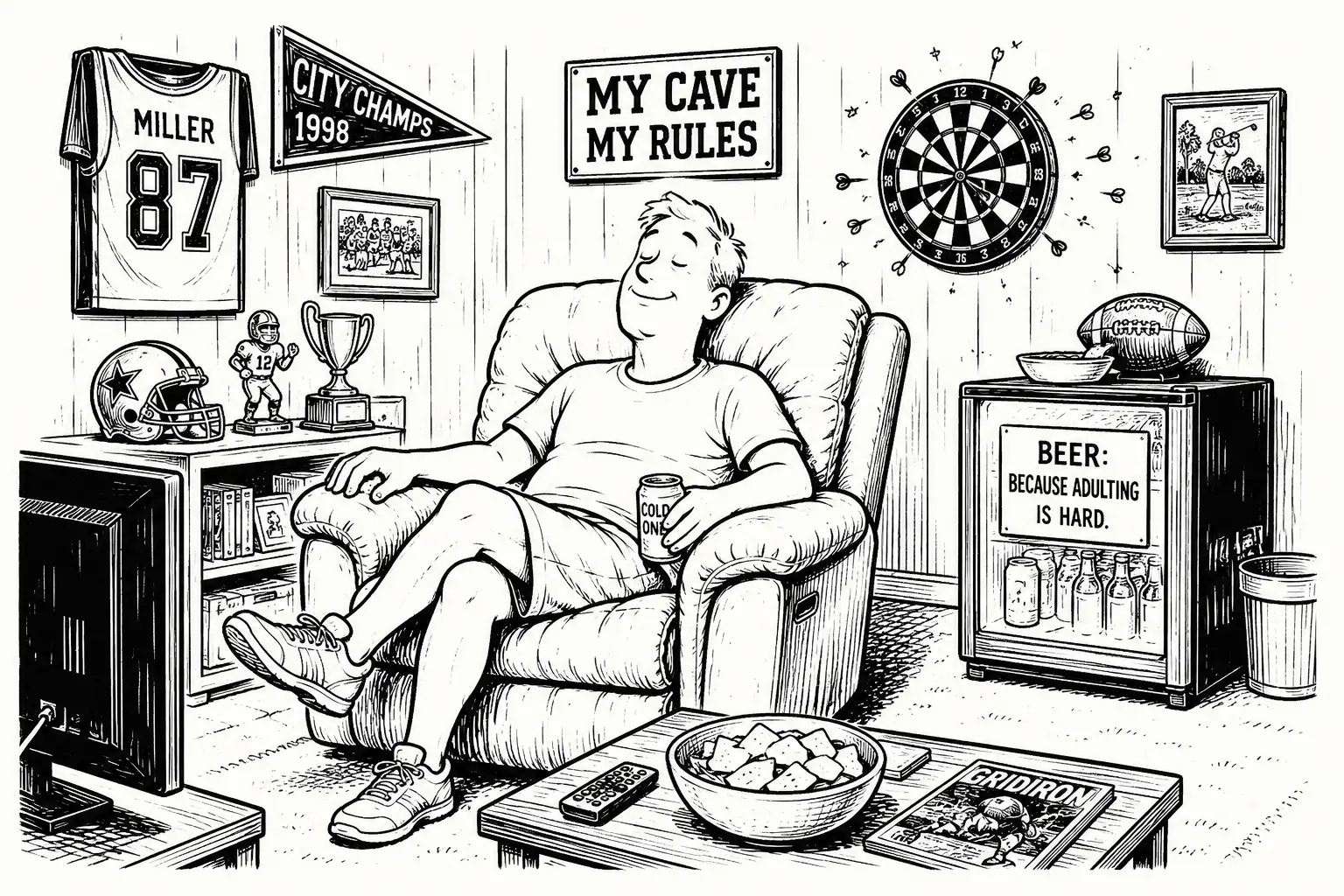
This is because the remote control is not, to him, a device for changing channels. It is a small object through which he exercises a form of control over his immediate environment. And that control, as it turns out, is doing meaningful psychological work.
The Thing Sociologists Have Been Saying for Decades
Researchers who study domestic behavior have long observed that small household objects become stand-ins for something larger. The thermostat. The preferred chair. The parking spot in a two-car garage. These aren’t arbitrary preferences. They’re the micro-expressions of a need that psychologists have named and studied extensively: autonomy.
Self-Determination Theory, one of the most replicated frameworks in behavioral psychology, holds that humans have three core psychological needs. Autonomy is the first one. When men feel that their autonomy within their own home is being routinely overridden, research published in the American Journal of Men’s Health found they are significantly more likely to disengage. Not pick a fight, not explain themselves, but go quiet and pull back.
The remote is the path of least resistance. It’s the smallest possible version of “this one thing is mine to decide.” In a household full of shared decisions and negotiated compromises, it represents a corner where no deliberation is required.
The Thermostat Follows the Same Logic
It’s not just the remote. It’s whatever he can control without it becoming a conversation.
The thermostat is the classic example. Entire comedy routines exist about this. What the comedy doesn’t quite capture is the reason: controlling ambient temperature is controlling the environment. And controlling the environment, even a small slice of it, satisfies something that has nothing to do with whether he’s actually cold.
Research published in the Journal of Marriage and Family found something worth holding onto here: relationship satisfaction is highest when both partners share in household decision-making, including the routine, low-stakes kind. The implication runs both ways. Hoarding every decision frustrates him. But so does being systematically excluded from the small ones.
The remote, the thermostat, the seat he always sits in. These are not power moves. They’re the smallest possible version of “I live here too.”
What to Actually Do With This
The good news is that the fix is genuinely simple.
Leave the remote on his side of the couch. Not as a concession. Not as a negotiated outcome. Just leave it there. The return on that small act of uncontested territory is disproportionate to its cost.
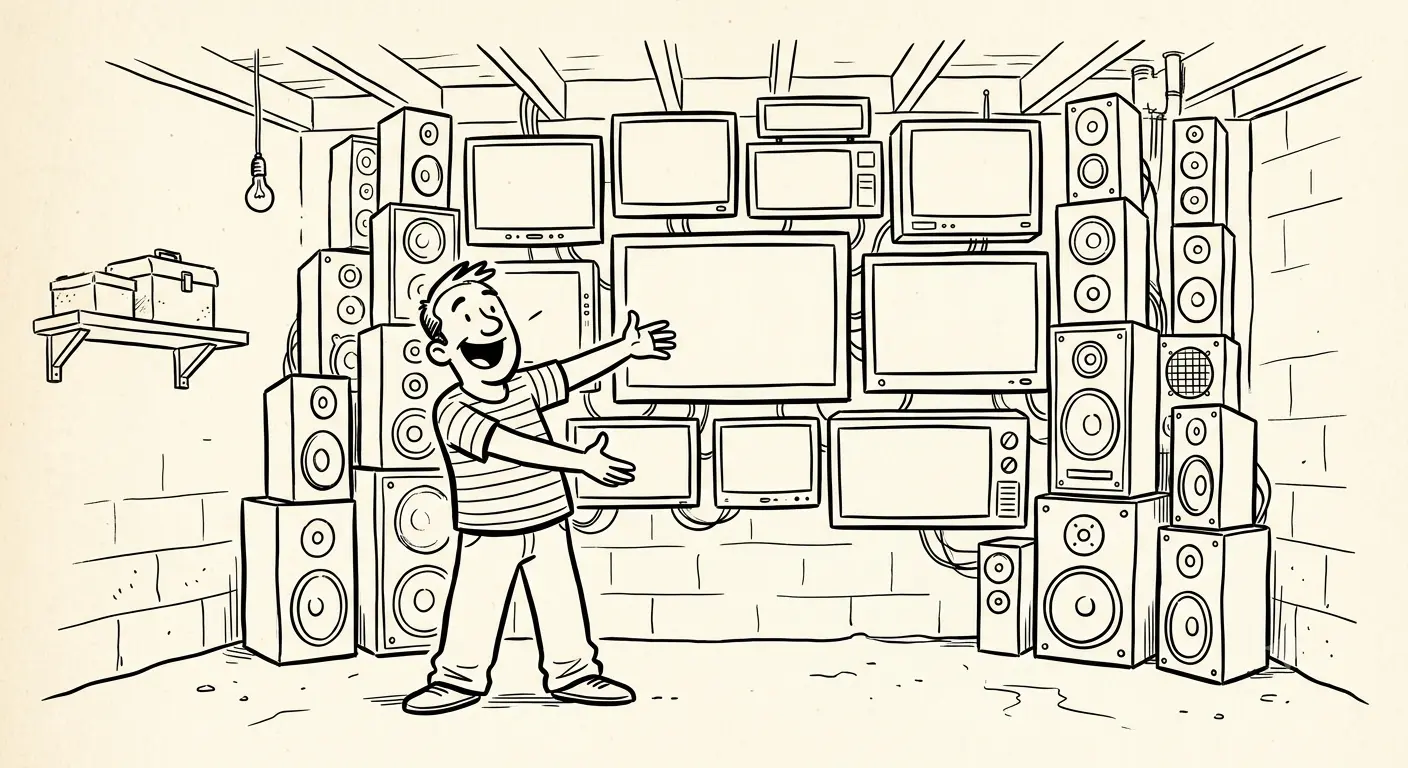
What you’ll get in exchange is a person who is, measurably, easier to be around in all the ways that matter more than television. The autonomy gets satisfied by the small object, which means it stops looking for somewhere else to express itself. It’s the same reason the garage or the basement corner matters: a small jurisdiction, freely held, does a disproportionate amount of emotional work.
He will change the channel at least twice without explanation. That’s just part of the arrangement.
This is an excerpt from Chapter 3 of Beers, Burgers and Booty. The full chapter covers the man cave, the chair that followed him to the basement, and what it costs when a man has no corner of the house that is unambiguously his. It’s in the book.