Rejection Doesn't Land the Way You Think It Does
You said not tonight and meant that. He heard something else entirely. Not because he's fragile, but because of how male self-worth gets wired early and stays.
You were tired. Or not in the mood. Or just wanted to sleep. These are all completely valid, and you said something entirely reasonable.
He said that’s fine. He went to sleep, or pretended to, and by morning it was over.
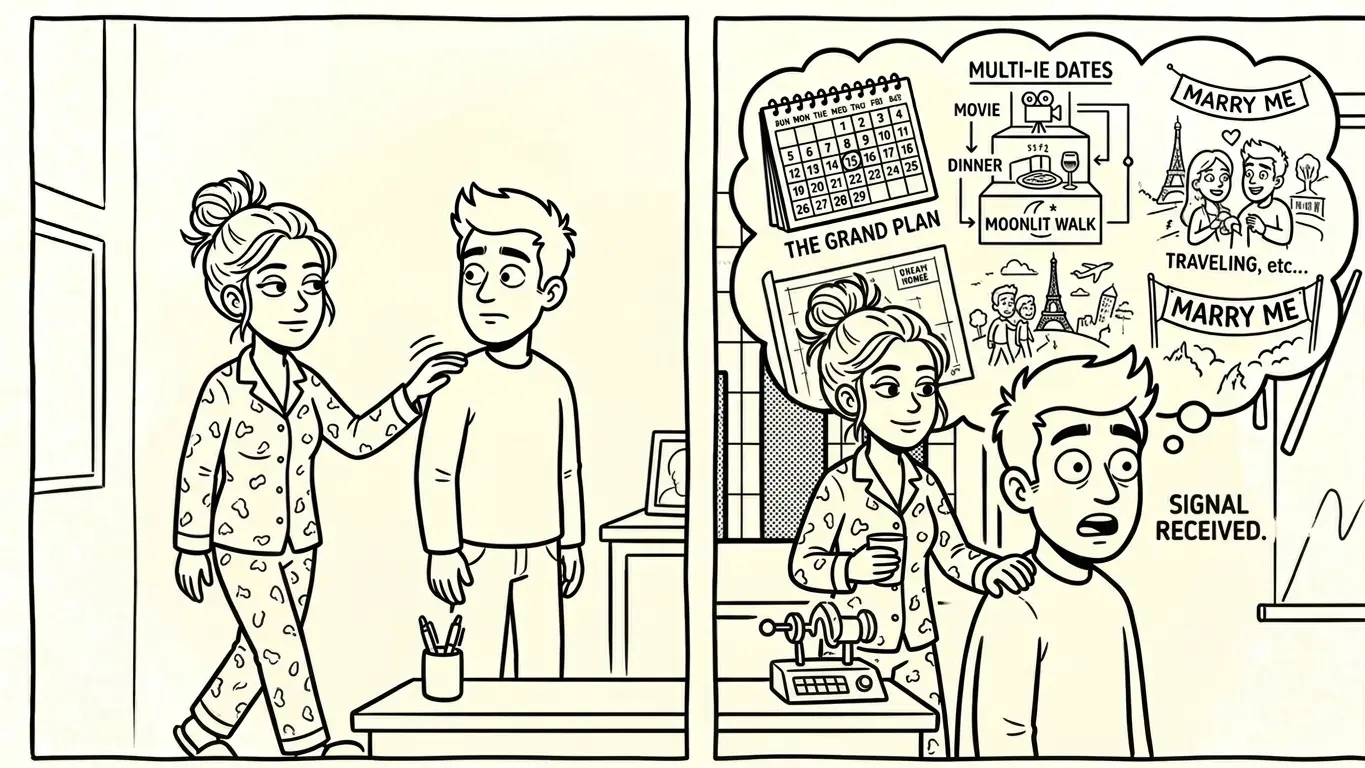
Except it wasn’t entirely over. Something landed in him that wasn’t about tonight, wasn’t quite about the sex, and had more to do with a set of feelings he doesn’t have good words for. He’s not going to bring it up. He may not even recognize it clearly himself. But it was there.
Here is what’s actually happening.
How Male Self-Worth Gets Wired
Research on male identity and help-seeking patterns has documented something consistent: many men tie their sense of personal worth closely to perceived desirability and sexual competence. Not all men, and not in every moment, but as a baseline feature of how male identity gets constructed, particularly through adolescence and early adulthood.
Psychologists Michael Addis and James Mahalik found that masculinity norms often suppress men’s ability to express emotional vulnerability while simultaneously making them more susceptible to identity threats tied to sexual rejection. The two things interact: he can’t easily talk about being hurt, and being rejected in a sexual context touches something close to his sense of self.
So “not tonight” doesn’t arrive as scheduling information. It arrives, at some level, as a signal about desirability. About how he registers to you. About whether he’s still the person you want.
The Gap Between Intent and Impact
You meant: I’m tired.
He heard, somewhere underneath the words: something is off.
This gap is not his fault, and it’s not yours. It’s a translation problem between two different emotional wiring systems. You are managing a practical need: rest, space, time. He is monitoring a relational signal: closeness, desire, connection. These are not the same message, and they produce two genuinely different conversations.
The interesting thing is how rarely couples realize this gap exists until the distance has already accumulated. A string of practical rejections, none of them personal, none of them mean-spirited, can read to him like a gradual withdrawal. He won’t bring it up because he knows intellectually that he shouldn’t take it personally. But feelings don’t operate on logic.
What Actually Helps
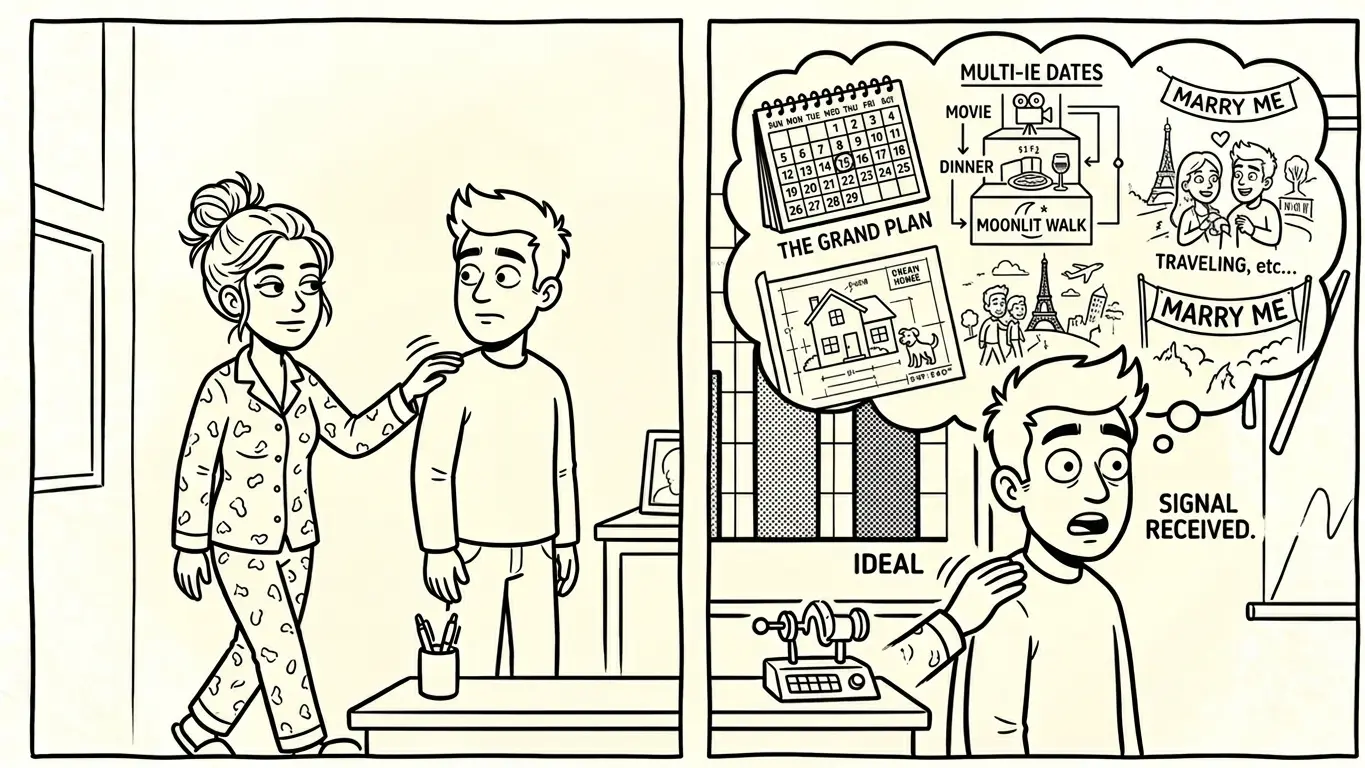
He doesn’t need you to say yes every time. He needs to know the rejection is about the circumstance, not about him.
A small signal changes everything: a touch on the shoulder, a “not tonight but I want to” instead of just “not tonight,” anything that makes the separation between the situation and his desirability explicit. He will not ask for this. But it will land.
This is a low-cost intervention with high return, and it’s only possible once you understand what’s actually being decoded on his end. The words are not the message. The feeling underneath the words is the message. Adjusting for that isn’t patronizing him. It’s speaking the language he’s actually hearing. And if you want to understand the flip side, what he’s not asking for but very much wants runs on the exact same wiring.
This is an excerpt from Chapter 15 of Beers, Burgers and Booty. The full chapter covers initiation, rejection, and what it means to a man when the physical part of a relationship goes quiet. It’s in the book.