He Will Eat Terrible Food in a Stadium and Consider It a Great Meal
The hot dog cost fourteen dollars. It was assembled before dawn. He's going to tell you it was one of the best things he's ever eaten, and he's not wrong.
The hot dog cost fourteen dollars.
It was produced in a facility that also makes other hot dogs, distinguished from those hot dogs only by its current location inside a large outdoor sports venue. It was handed to him through a small window by someone wearing a polo shirt. He ate it standing up, in the sun, surrounded by forty thousand people and a significant amount of ambient noise.
He will describe this hot dog for the rest of the week.
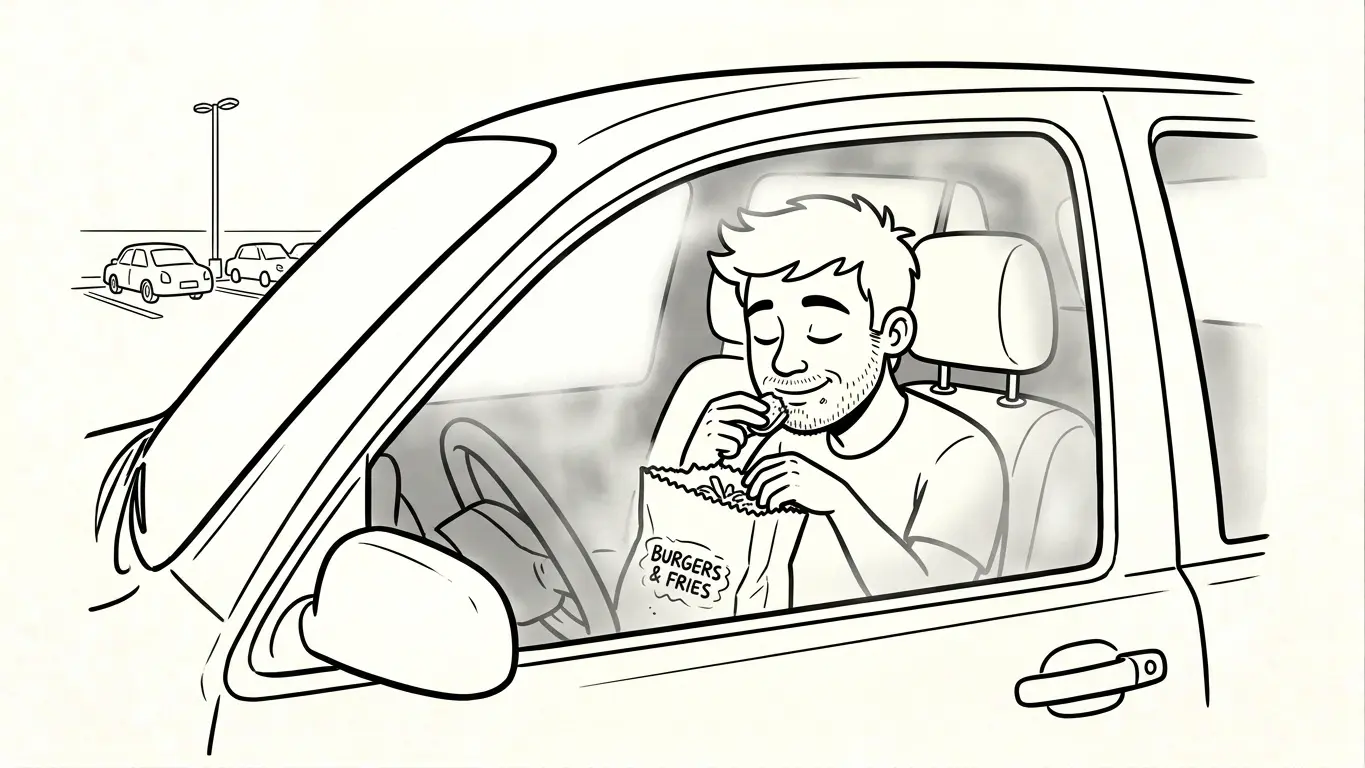
Not obsessively. Just in the way a person mentions something genuinely good. “That stadium food was actually incredible,” he’ll say, with the sincerity of a man reviewing a restaurant he chose on purpose. You will look at him. He will mean it.
Why the Context Is Actually the Ingredient
Oxford researcher Charles Spence has spent years documenting how dramatically environment changes the experience of food. Not the perception of food. The actual experience. The same wine tastes better when it’s served in a heavier glass. The same coffee tastes better in a certain colored mug. The same hot dog, eaten at 1pm under open sky with a game about to start, tastes meaningfully different from the same hot dog eaten at a folding table in a parking lot.
This is not a placebo. The brain processes flavor, context, mood, and memory simultaneously, and what it produces is a unified experience that cannot be reduced to the ingredient list. The fourteen-dollar stadium hot dog is not being evaluated as a hot dog. It is being evaluated as an event.
He is not deluded. He is operating exactly as human beings are designed to operate.
What He’s Actually Consuming
The food at a live sporting event is not food the way dinner is food. It’s part of the occasion. It’s the thing you hold while you’re there. It marks the experience as distinct from regular life in a way that has nothing to do with taste and everything to do with what the meal represents.
This is why gas station coffee tastes fine on a road trip and terrible on a Tuesday at the office. Same coffee. Different story being told around it.
For men, specifically, this context-dependency runs deep in how satisfaction gets measured. The meal doesn’t just have to taste good. It has to fit. A perfectly prepared piece of grilled salmon would be wrong at a stadium in a way that has nothing to do with the salmon’s quality. The hot dog is right. It belongs to that moment. It will be remembered as part of something that mattered.
The Fourteen Dollars
Here’s the honest version: he overpaid for a food product of unremarkable quality and had a significantly better time because of it.
This is not irrationality. This is a person correctly identifying that the experience is the thing being purchased, and the hot dog is the delivery mechanism. The price is part of what signals that this is a special occasion, not a regular Tuesday. Special occasions have different food. The food is part of how you know it’s special.
He will do this again. Every time. He will be satisfied every time. The math is actually fine. The context-as-ingredient effect shows up at home too — which is why the meal he mentioned three weeks ago lands the way it does.
This is an excerpt from Chapter 10 of Beers, Burgers and Booty. The full chapter covers why the meal matters more than the food, what he’s really asking for when he says he wants to go out, and the specific magic of the Wednesday night dinner nobody planned. It’s in the book.