He Doesn't Know Why He's in a Bad Mood. You Do.
He can't explain it. He's not even sure it's happening. But you've been watching the warning signs stack up for three days, and you know exactly what's missing.
He came home fine. Said dinner was good. Answered two questions about his day and then went quiet in that specific way that isn’t rude exactly but also isn’t present. You asked if everything was okay. He said yes.
He was lying. Not intentionally. He genuinely did not know.
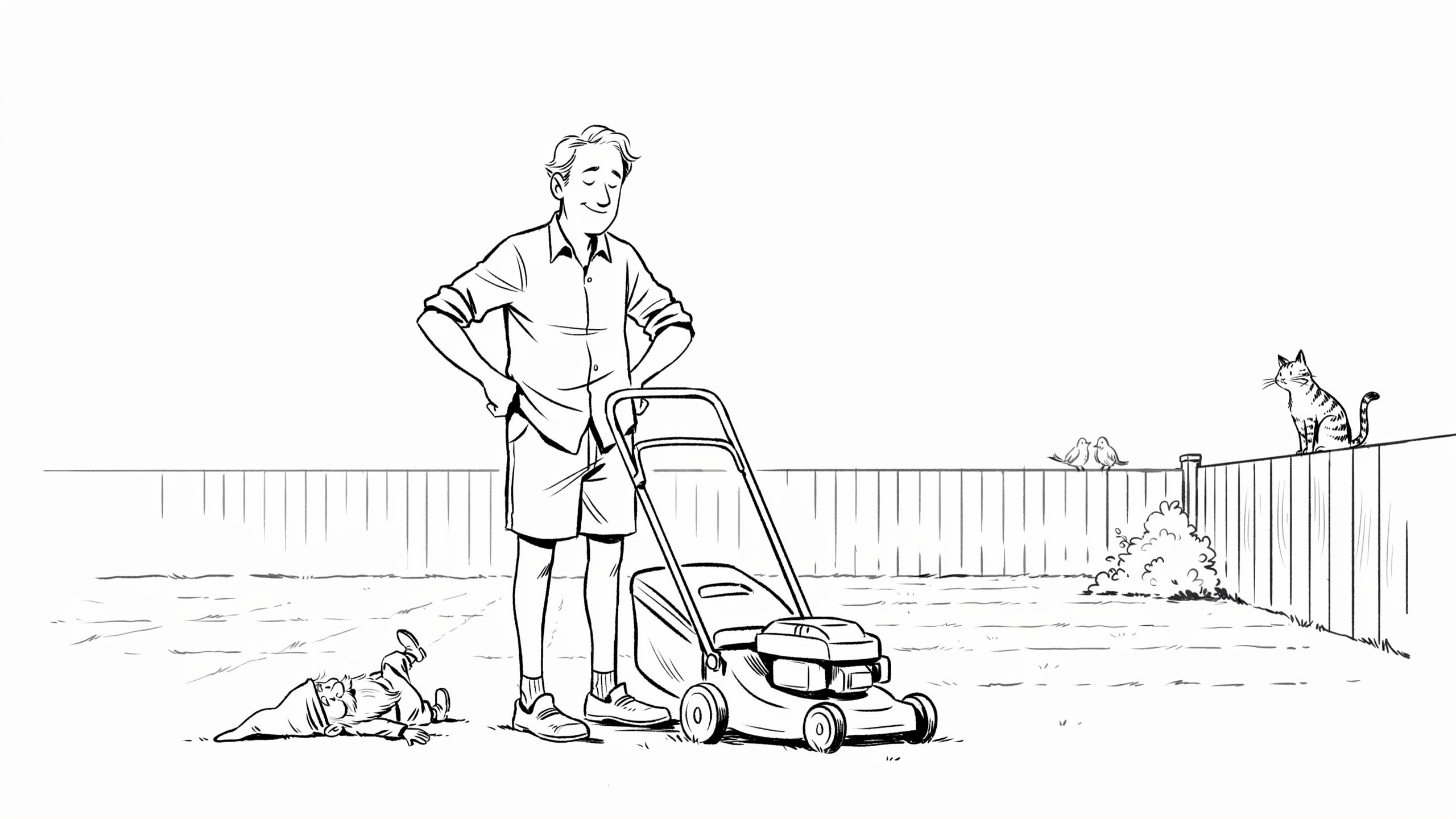
This is one of the more reliably confusing things about men: they are often the last to notice when something is wrong with them. Not because they’re hiding it. Because the connection between “I haven’t had any time to myself in two weeks” and “I am currently irritable for no apparent reason” doesn’t fire automatically. It’s the same reason the garage matters more than it looks. He experiences the irritability. He does not always trace it back to the cause.
You usually do, though.
What the Research Actually Says
Research published in the American Journal of Men’s Health studied how men cope with stress and what happens when their regular outlets disappear. The findings weren’t subtle.
Men tend to rely on what researchers call “approach-oriented” coping: structured solitary hobbies, physical activity, time outdoors, and a clear mental boundary between work and home. When those outlets are removed or restricted, men don’t find better ways to cope. They find worse ones. Social withdrawal. Avoidance. The specific flatness that looks like indifference but is actually something closer to depletion.
The word in psychology for proactively chosen solitude is “positive solitude.” It sounds like a spa concept. It isn’t. It’s the cognitive processing time that lets a person absorb daily friction before it accumulates into something harder to manage. Research in Frontiers in Psychology found that when this processing space disappears, small stressors pile up without filtration, quietly eroding mood and self-esteem until the person can’t quite remember why they feel off.
He can’t remember because the stacking was gradual. You noticed because you were watching.
The Thing He Will Not Say
He’s not going to walk in on a Tuesday and say: “I need two hours of uninterrupted time to do something I enjoy or I’m going to become difficult to be around.”
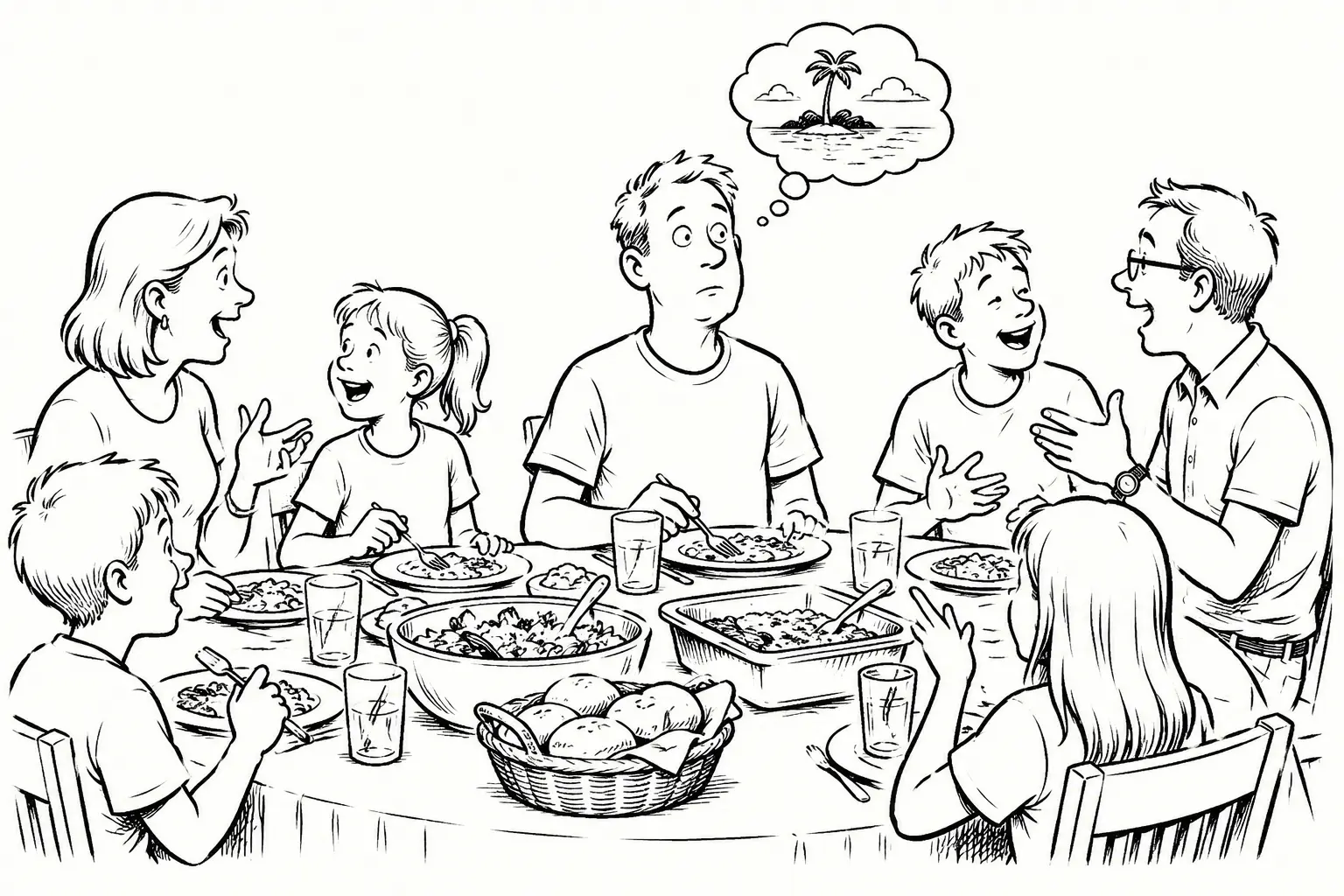
He may not even understand that this is what he needs. What he knows is that he feels a low-grade version of wrong, and there doesn’t seem to be a reason. The game he didn’t watch. The project he didn’t finish. The run he kept skipping. None of them feel significant enough to explain what he’s feeling, so he doesn’t mention them.
Self-Determination Theory, one of the most cited frameworks in psychology, holds that human wellbeing requires three things: autonomy, competence, and connection. Pull away the first two long enough and the third gets harder. He becomes less of a person who wants to connect and more of a person who needs to be left alone, which he will also not say out loud.
What You Can Do With This Information
This is not a fix-it guide. He’s a grown adult and his decompression habits are his to manage.
But knowing the mechanism is useful. When you notice the specific quiet, not the comfortable silence, but the slightly-too-flat one. You now have a working hypothesis. It’s probably not you. It’s probably not anything you did. It’s more likely a deficit building up over days that he hasn’t diagnosed yet.
The most efficient thing is usually the most direct thing. Not “what’s wrong.” He’ll say nothing. More like: “when’s the last time you had a few hours to yourself?” Watch his face do the math.
He’ll figure it out from there. He just needed someone to hand him the question. If you’re not sure which B is running low, the Three Bs Field Diagnostic can tell you in about two minutes.
This is an excerpt from Chapter 2 of Beers, Burgers and Booty. The full chapter covers what his outlet actually is, why it matters more than it looks, and what happens to the household when it goes missing for too long. It’s in the book.